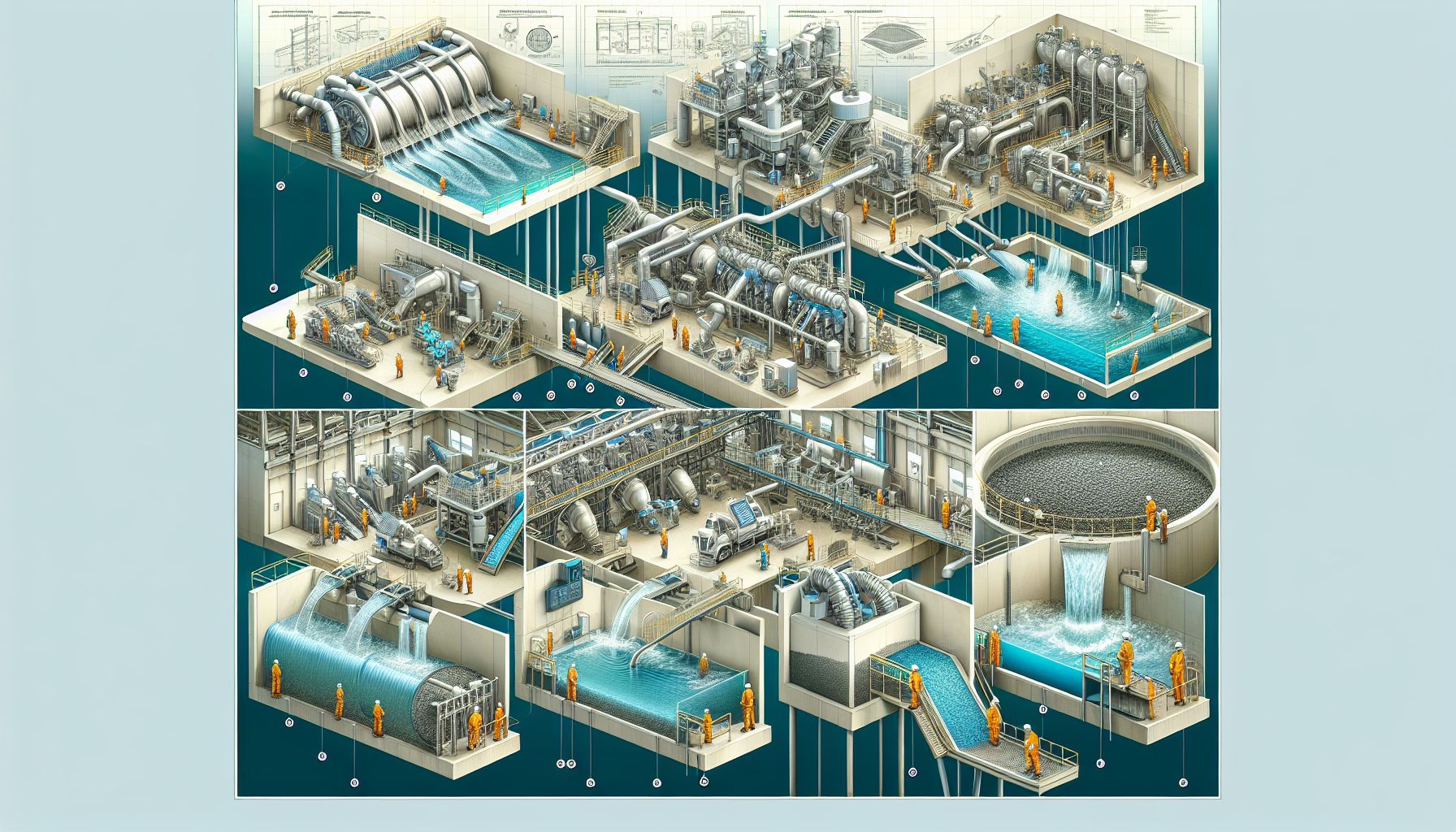
Preliminary treatment processes and solids removal equipment
The world of wastewater treatment technology is a complex one, abundant with numerous methods and equipment. A foundational aspect of any water treatment process is the preliminary treatment process and solids removal. These necessary steps ensure that subsequent treatments are effective by eliminating solid materials and other matter.
Understanding Preliminary Treatment Processes
At the front end of any water treatment plant, preliminary treatment aims to remove large solids and grit to protect both machinery and later stages of treatment. Typically, a series of procedures remove the undesirable materials, protecting the equipment from damage and ensuring smoother operations downstream.
The general preliminary treatment stages include screening, grit removal, and sometimes, fat and oil shrinkage. These steps use a variety of equipment from bar screens to grit chambers and comminutors.
Bar screens, for instance, catch large debris like leaves, wood, and other bulky solids that could potentially damage downstream machinery or cause a blockage. Next, the grit chambers denounce smaller, granular solids—think sand or grit—that can cause abrasive wear to equipment over time.
Do you know what comes next in this process? Well, comminutors, or grinders, play a key role. They grind down large solids into smaller particles, which are easier to handle during primary treatment.
The Importance of Effective Solid Removal
Overlooking proper solids removal might be tempting, but it can lead to significant problems down the line. The whole water treatment process could be disrupted, causing equipment failures, poor water quality, and even breaches in health and safety regulations. According to the Department of Ecology in Washington State, unremoved solids can lead to algal blooms, oxygen deficiencies, and negative impacts on aquatic life.
Implementing efficient solid removal equipment isn’t merely a pragmatic step in ensuring practicalities like equipment longevity—it also safeguards water quality, which has a direct impact on ecosystems and public health. Therefore, the next time you consider your water treatment process, remember the critical role of solid removal and the equipment used.
Solid Removal Equipment in Action
Let’s examine some of the most widely used solids removal equipment in the industry. Two that immediately come to mind are sedimentation tanks (also known as primary clarifiers) and dissolved air flotation units.
Sedimentation tanks serve to remove suspended solids. They provide a period of quiescence during which particles can settle at the bottom of the tank. According to a study from the Journal of Environmental Engineering, sedimentation has the potential to remove up to 60% of suspended solids and about 35% of BOD (Biochemical Oxygen Demand).
On the other hand, dissolved air flotation units are particularly effective in removing small, lighter particles that are difficult to settle out. They excel in applications like removing algae and oil, making these units indispensable in specific treatment scenarios.
Ensuring Effective Solids Removal
Efficiently implementing solids removal processes isn’t just about choosing the right equipment. Process control, operations management, employee training, and regular monitoring also play decisive roles. Additionally, following good practices like regular equipment maintenance and adhering to local water treatment guidelines, such as the Washington state water quality guidance, are important cornerstones.
These standards, which encompass regulatory requirements and best management practices, provide excellent models to achieve optimal operations. If you operate within Washington state—or even outside it—it’s wise to acquaint yourself with these guidelines to improve the quality of your operations.
Keeping a Forward-Looking Approach
The discipline of water treatment is evolving, and adopting a forward-looking approach can reap multiple benefits. Research into newer methods, like membrane filtration systems, is changing the face of solid removal, promising higher efficiencies and smaller footprints.
Just to give you an idea, a 2019 research paper published in the Journal of Water Process Engineering pointed towards using magnetic nanoparticles to remove heavy metal ions from wastewater. Imagine the potential!
Moreover, the increased emphasis on sustainability and circular economy concepts is pushing the industry towards resource recovery. Bio-solid byproducts, once viewed as waste, are now potential fertilizers and sources of energy. The transformation is exciting, to say the least.
Wrapping It All Up
It’s clear that preliminary treatment processes and solid removal equipment are the unsung heroes in the vast realm of wastewater treatment. These processes lay the groundwork for all subsequent treatment stages, ensuring efficient operations and quality output.
As the industry continues to evolve with new technologies on the horizon, maintaining a balance between traditional practices and innovation can ensure a robust and resilient water treatment process. Proper implementation and regular upkeep of these processes, coupled with adherence to guides like the Washington state water quality guidance, will ensure that we move towards a future of improved water quality, healthier ecosystems, and enhanced sustainability.
Every drop counts. Let’s make it count the right way.
Comments are Disabled