Complete guide to fine screening systems for wastewater treatment
In a world where environmental stewardship has become a critical focus, wastewater treatment technologies have advanced to tackle the challenge head-on. This article sheds light on one of those crucial pieces of technology that maintains our waterways’ health and protects our environment: the fine screening systems.
Understanding Fine Screening Systems
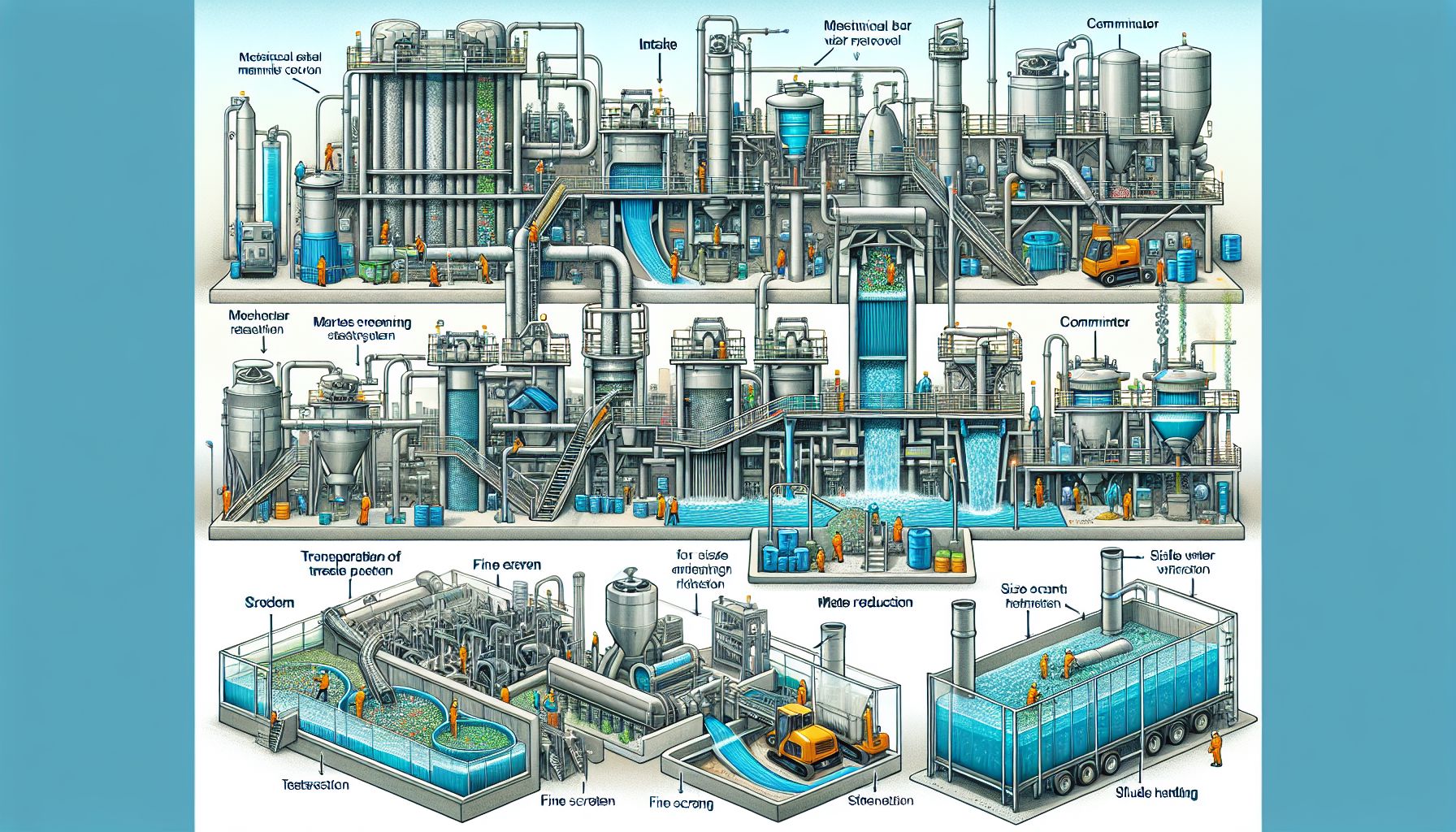
Fine screening systems are an integral part of wastewater treatment plants (WWTP), specifically designed to eliminate a range of solid materials—such as rags, plastics, or plant matter—from wastewater streams before they reach critical downstream equipment.
These screening systems come in various designs and types, depending on the application and the size of the material to be removed. They’re typically categorized by mesh or perforation sizes, predominantly falling within the 1mm to 6mm range, as defined by the American Society of Mechanical Engineers (ASME).
But why is this key component necessary in wastewater treatment? Well, unremoved grit and debris can cause significant damage to wastewater treatment equipment, including pumps and valves, leading to costly repairs or replacements if left unchecked. Besides, improved solid removal has a substantial environmental impact, reducing the amount of harmful waste that ends up in our water streams.
The Core Principles of Fine Screening Systems
The mechanics of fine screening systems are straightforward and employ physics and engineering principles at their heart. When wastewater enters the fine screening system, it’s forced through a screening area—either a perforated plate or a mesh. Solids too large to pass through get captured and held, while the wastewater, now largely free of these undesired materials, continues onto further treatment processes.
Automatic cleaning mechanisms, such as rotating brushes or spray nozzles, typically help keep the screens clear in modern systems. These accumulated solids (screenings) are then transported, usually by a screw conveyor, into a compactor where they’re dewatered and discharged. The ease of operation, minimal maintenance costs, and efficient solid-liquid separation attributes make these units an essential addition to any WWTP.
It’s interesting to dive deeper into the world of fine screening systems. They employ an intriguing combination of engineering principles and practical design to accomplish not just effective wastewater treatment but also contributing to the broader vision of environmental sustainability.
Types of Fine Screening Systems
While all fine screening systems aim to remove unwanted solids from the wastewater stream, the specific design can greatly vary. Three widely implemented designs stand out:
Rotary Drum Screens
Using a rotating cylindrical drum with either a perforated plate or a wedge wire, these models capture solids on the screen and a backwash system removes and transports them into a discharge point.
Step Screens
Step screens use a step-like design where wastewater flows over the “steps.” These screens are beneficial where the fluid has a heavy load of solids as they clear themselves better and require less frequent deep cleanings.
Band Screens
A rotating band or belt captures the solids in these systems. As the band rotates around, the captured solids are carried to a system that washes and removes them off the band.
Selection Considerations for Fine Screening Systems
When adding a fine screening system to a wastewater treatment process, it’s essential to consider factors like its design, the size and nature of the solids to be removed, the flow rate of the waste stream, and its overall cost, among others.
Take note of the system’s footprint and whether it’s compatible with your plant’s available space. It’s also critical to consider maintenance requirements. Can your team handle the maintenance, or will you need to contract it out?
Then there’s the factor of flow channel depth. Deeper flow channels may require more robust designs and specialized equipment. Lastly, cost considerations shouldn’t be taken lightly – divide your thinking into both initial costs and long-term maintenance and operation costs.
Looking Towards the Future
Advancements in fine screening technology are ongoing, and we can anticipate several trends. Improved automation, enhanced screening capabilities, and long-lasting materials are among the expected improvements. We can also foresee a stronger drive towards more energy-efficient operations and sustainable solutions that reduce carbon footprint.
Fine screening systems have become indispensable elements in wastewater treatment processes, striking a fine balance (pun intended) between operational efficiency, cost management, and environmental responsibility. With our increasing commitment to a cleaner, healthier environment, these systems will undoubtedly continue to play a pivotal role in our mission.
Comments are Disabled